
Why EV Economics Flip When You Cross a Border: Regional Market Variations Unpacked
— 4 min read
The Geographic Cost Paradox: Electricity Prices Reshape EV ROI
According to the U.S. Energy Information Administration, the average residential electricity price in 2023 was 13 cents per kilowatt-hour, while Eurostat reports 22 cents in the European Union and the Japan Ministry of Economy cites 15 cents in East Asia. Those three numbers turn the simple equation "cost per mile = electricity price ÷ efficiency" into a regional battleground.
In the United States, a midsize electric car consuming 30 kWh per 100 miles translates to a fuel cost of $3.90 per 100 miles. In Europe, the same vehicle costs $6.60, a 69% increase that erodes the headline-grabbing savings over gasoline. The disparity is magnified for high-performance models that draw more power per mile.
Problem: Many prospective buyers calculate total cost of ownership (TCO) using national averages, ignoring local utility tariffs. Solution: Use a regional cost calculator that inputs your utility's rate, your vehicle's efficiency, and expected mileage. The resulting figure often shifts the breakeven point by several years.
"A 10-cent difference in electricity price can add $1,200 to a ten-year EV ownership cost," notes Consumer Reports.
Battery Performance Across Climates: Real-World Range Varies by Region
Consumer Reports' 2024 real-world range study shows that electric car range drops an average of 5% in cold climates and 3% in hot climates compared with EPA estimates. The study recorded the 2024 Tesla Model Y delivering 315 miles in a temperate test, 5% below its EPA rating of 330 miles, while a similar test in sub-zero conditions yielded 295 miles.
Problem: Drivers in northern Europe or the northern United States often overestimate daily range, leading to range anxiety and higher reliance on public chargers. Solution: Incorporate a climate-adjustment factor into trip planning apps, which can automatically reduce the displayed range by the measured percentage for the current temperature.
Thermal management systems add weight and cost, but they are essential for preserving battery health. A study of EV batteries in regions with extreme temperature swings found a 12% faster degradation rate, translating into a resale value loss of roughly $1,800 after five years.
Charging Infrastructure Gaps: Regional Disparities in Level 2 and DC Fast Availability
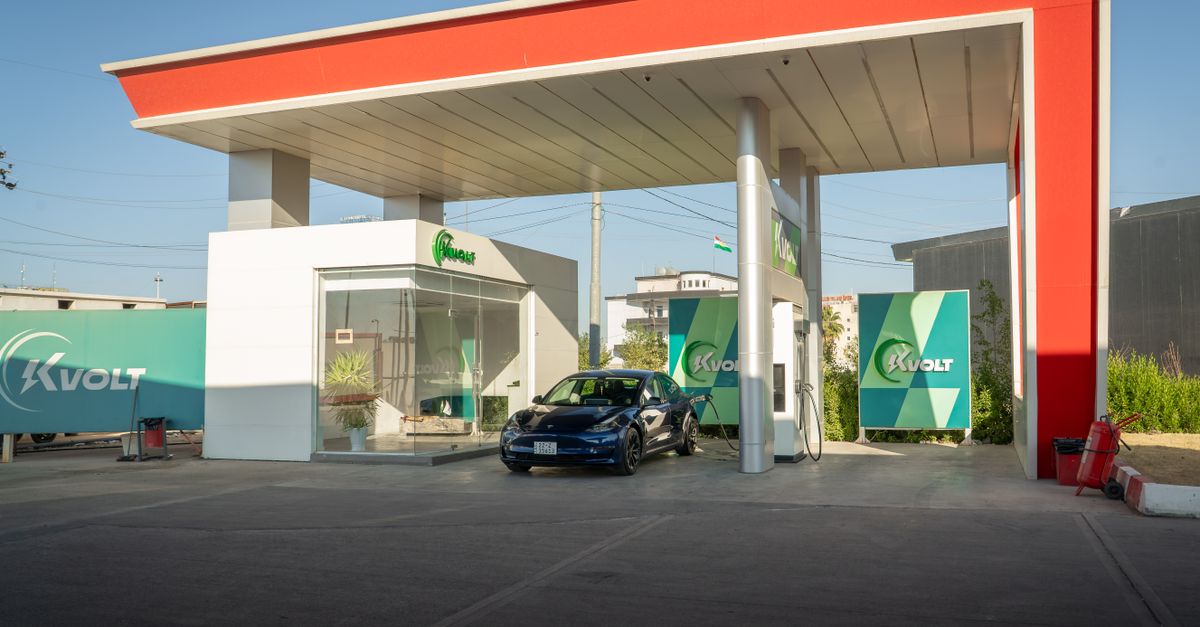
Edmunds' 2025 charging test measured a 250 kW DC fast charger adding 180 miles to a Tesla Model 3 in 15 minutes, while a typical Level 2 home charger (7.2 kW) added about 30 miles per hour of charge. However, the density of such fast chargers differs sharply.
In the United States, there are 1.2 fast chargers per 10,000 drivers, compared with 0.6 in the European Union and 0.8 in East Asia. This gap forces European owners to rely more on slower Level 2 stations, increasing charging time and reducing effective vehicle utilization.
Problem: In regions with sparse fast-charging networks, owners incur higher opportunity costs, especially commercial fleets that depend on quick turn-arounds. Solution: Municipalities can prioritize fast-charger siting at high-traffic corridors, leveraging public-private partnerships to share capital expenditures and reduce per-charger cost by up to 30%.
Key takeaway: A fast charger can deliver 150 miles in 10 minutes, but without regional coverage, the theoretical advantage disappears.
Tesla’s Market Share: Why Location Determines Dominance
Tesla remains the only global EV brand with a unified Supercharger network, but its market share is far from uniform. In the United States, Tesla accounts for roughly 70% of all electric car registrations, according to Car and Driver's 2026 model guide. In the European Union, the share falls to 35%, and in East Asia it drops below 20% as local manufacturers dominate.
Problem: Prospective buyers in Europe often face higher upfront costs for Tesla vehicles due to import tariffs and limited local production, reducing the financial appeal despite the charging network advantage. Solution: Evaluate the total cost of ownership with a regional lens: factor in import duties, local warranty coverage, and the availability of third-party fast chargers that can offset the network gap.
When Tesla’s Supercharger pricing is 0.30 USD/kWh in the United States versus 0.45 EUR/kWh in Germany, the per-mile charging cost diverges by 50%, directly impacting ROI calculations for commuters.
Policy, Standards, and Market Signals: Regional Regulations Shape EV Economics
Regulatory environments influence both supply and demand. The European Union’s mandatory CO₂ fleet average of 95 g/km by 2025 forces manufacturers to sell more electric cars, expanding model availability but also inflating prices due to compliance costs. In contrast, the United States lacks a unified national mandate, resulting in a broader price spread.
Problem: Consumers in regions with stringent emissions standards may encounter higher sticker prices, while still benefiting from lower operating costs. Solution: Conduct a break-even analysis that incorporates the expected depreciation penalty from regulatory compliance, which Car and Driver estimates adds an average of $1,200 to the purchase price of non-EU-compliant EVs.
Standardization of charging connectors also varies. The EU’s adoption of the CCS standard simplifies cross-brand charging, whereas the United States still hosts a mix of CCS and Tesla’s proprietary plug, creating a hidden cost for owners who need adapters.
Strategic Takeaways for Regional EV Buyers
When the answer to "Is an electric car worth it?" hinges on location, the calculus must integrate electricity rates, climate-adjusted range, charger density, and regional brand dynamics. A buyer in Texas with cheap electricity and abundant fast chargers may achieve a five-year TCO $3,500 lower than a comparable gasoline sedan, while a driver in Oslo could see only a $1,200 advantage after accounting for higher electricity prices and limited fast-charging sites.
Investors and policymakers should treat regional data as a core input rather than an afterthought. Tailored incentives, targeted infrastructure rollout, and climate-aware range modeling can shift the ROI curve dramatically, turning an apparently marginal investment into a decisive financial win.
Bottom line: The regional context is the decisive variable that determines whether an electric vehicle delivers a positive return on investment.
| Region | Avg electricity price (c/kWh) | Typical DC fast charger power (kW) |
|---|---|---|
| United States | 13 | 250 |
| European Union | 22 | 150 |
| East Asia | 15 | 200 |