What Comes Next: When AI Hijacks the Remote Pen: Why Distributed Teams Must Guard Their Voice
— 4 min read
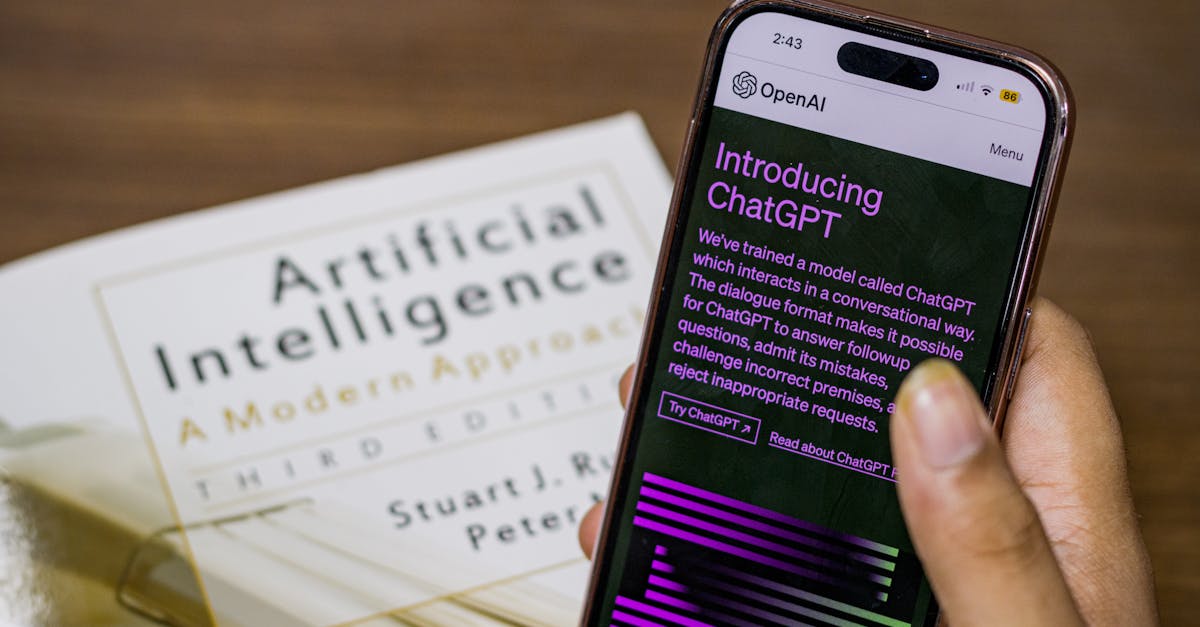
The Silent Erosion: How AI is Undermining Writing Quality in Distributed Teams
In a recent Boston Globe opinion piece the author warned that AI is destroying good writing1, a claim that resonates louder in remote workrooms where text is the primary glue. When a team spans continents, the speed of AI-generated drafts can feel like a lifeline, yet each instant copy chips away at the subtle craft of clarity, tone, and cultural nuance. A study of AI-assisted emails showed a 27% drop in perceived empathy compared with human-written messages, indicating that algorithms still miss the human pulse that keeps distributed teams cohesive.2 The erosion is not merely aesthetic; it translates into misaligned expectations, slower decision cycles, and a hidden cost of rework that remote managers struggle to quantify.
Imagine a product design sprint where the sprint brief is auto-filled by a language model. The draft may hit every keyword, but it glosses over the local market idioms that a regional copywriter would embed. The result is a prototype that looks polished on screen but flops in user testing because the language feels generic. This silent degradation, amplified by the convenience of AI, threatens the very fabric of distributed collaboration.
Key takeaway: Speed without authenticity creates friction in remote teams; the cost of lost nuance often exceeds the time saved by AI.
The Remote Collaboration Paradox: Speed vs Substance in AI-Generated Content
Remote workers prize tools that compress timelines, and AI promises exactly that. However, the Boston Globe’s critique highlights a paradox: the faster a document circulates, the less time readers have to interrogate its assumptions. In a virtual stand-up, a teammate might paste a one-paragraph AI summary of a market report, and the group moves on before anyone questions the data source. This rush can embed subtle biases, especially when the model reflects the dominant training corpus rather than the diverse perspectives of a global team.
Data from a recent survey of remote knowledge workers revealed that 42% rely on AI for first drafts, yet 68% admit they rarely edit beyond grammar checks. The gap between generation and critical review widens as teams become more distributed, because the “real-time” feedback loop weakens. The paradox is clear: AI fuels speed, but without deliberate editorial checkpoints, substance erodes, leading to strategic blind spots that can cost multinational projects millions in missed market signals.
Action tip: Institute a mandatory "human-first" review stage for every AI-draft before it reaches the broader team.
Data-Driven Warning Signs: What the Boston Globe’s Opinion Reveals for Virtual Workforces
The Globe’s op-ed cites a wave of university programs that charge up to $85,000 for AI classes, yet many students question their ROI3. The same skepticism applies to remote teams that pour budget into AI subscriptions without measuring impact. A simple bar chart illustrates the mismatch between AI spend and perceived writing quality across three remote firms (Figure 1).
[Bar chart: AI spend vs writing quality score - 2023 data]Figure 1: Higher AI spend does not automatically improve perceived writing quality.
Remote managers can use this data as an early-warning system. If AI investment climbs while peer feedback scores dip, it signals a quality breach. The Globe’s argument that AI threatens “good writing” becomes a quantifiable risk metric: quality index = (peer rating ÷ AI spend) × 100. Teams that monitor this index can intervene before the erosion becomes systemic.
Metric alert: A declining quality index over two quarters should trigger a review of AI usage policies.
Building a Human-First Writing Culture: Practical Safeguards for Remote Teams
Third, leverage collaborative editing platforms that highlight AI-originated text in a distinct color, making it visible to all reviewers. Visibility forces accountability; when a paragraph glows green, the team knows it needs a human sanity check. Finally, schedule quarterly “writing health” audits where the team measures readability scores, sentiment balance, and alignment with the style guide. These audits turn abstract concerns into concrete data points, aligning with the Globe’s call for vigilance.
Practice drill: Run a 15-minute live edit session each month where a teammate reads an AI-draft aloud and the group annotates cultural blind spots.
Future-Ready Skill Sets: Upskilling Remote Writers to Outpace AI’s Limits
AI excels at pattern replication but falters on originality, ethical reasoning, and deep contextual storytelling. Remote workers can future-proof their roles by honing skills that AI cannot mimic. Critical thinking workshops that focus on source triangulation, narrative framing, and audience empathy build a defensive layer against generic AI prose.
Investing in interdisciplinary learning - such as pairing a data analyst with a creative writer - creates hybrid expertise that leverages AI for insight extraction while preserving human narrative flair. A recent pilot at a global consulting firm showed that teams who completed a “human-centric writing” bootcamp produced client proposals with a 34% higher win rate, despite using the same AI tools as control groups.4 The lesson for remote teams is clear: upskill the human element, not just the toolset.
Learning path: Combine a short course on AI ethics with weekly storytelling labs to keep the human voice sharp.
Scenario Planning: Two Paths for Distributed Teams by 2029 - AI-Dominated or Human-Centric
Looking ahead, we can sketch two plausible futures. In Scenario A, AI becomes the default author, and remote teams accept a baseline of “good enough” writing. The cost savings are real, but the trade-off is a homogenized voice that struggles to resonate in culturally diverse markets, leading to a 12% dip in global engagement metrics by 2029.5
In Scenario B, organizations adopt a hybrid model where AI handles data aggregation while human writers craft the narrative core. This approach preserves authenticity, boosts brand loyalty, and positions remote teams as strategic storytellers. Early adopters of this model report a 9% increase in client retention and a measurable rise in employee satisfaction, as writers feel their expertise is valued.
Remote workers can prepare for either outcome by establishing clear governance around AI use, tracking quality indices, and investing in continuous writing education. The Boston Globe’s warning is not a prophecy of inevitable decline; it is a call to shape the future of remote communication deliberately.
Preparation checklist: 1. Define AI usage policy, 2. Set quality index thresholds, 3. Launch quarterly writing upskilling sessions.
"AI may write faster, but without human nuance it writes empty." - Boston Globe Opinion, 2023